







Professor Steve Okecha is entitled to his critique. What he is not entitled to and what any serious public commentator should avoid, is the mixture of ad hominem, selective fact-picking and rhetorical sleights-of-hand that litter Mister Senator. If our public square is to mature, arguments must be measured against verifiable facts and constitutional procedure, not personal invective.
Let me dismantle the key claims in that piece and replace bluster with documented reality.
“By fiat”? No — the lawmaker used the legislative route.
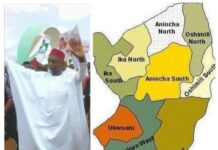
The essay accuses Senator Ned Nwoko of promising Anioma State by fiat. That charge is misleading. Senator Nwoko sponsored a constitutional amendment (Senate Bill 481) and actively lobbied colleagues in the Senate; the bill has secured widespread senator backing and has moved through readings and hearings in the usual legislative channels. This is the opposite of “fiat” — it is the constitutional route for state creation.
We all know that State-creation is a rigorous constitutional process and not a personal whim as Okecha wrongly claim.
Anyone serious about state creation must recognise the rules in the 1999 Constitution: a proposal must be supported locally, approved in a referendum in the area concerned, and pass with high thresholds in state assemblies and the National Assembly before a new state can be created. The senator’s bill opens a process that will be tested against these strict legal requirements — not a single man’s decree. Criticism should therefore focus on evidence and organisation, not on imputations of lawlessness.
Does Okecha not know that achievements deserve sober scrutiny, and not dismissal?
Professor Okecha reduces the senator’s role in the London–Paris Club refunds to “you had a job; you were paid.” That is an unfair simplification of the public record. Multiple sources document Nwoko’s involvement in the legal work and investigative reports that helped secure refunds for states and local governments; he has also publicly stated his leadership role in those efforts. It is proper to acknowledge the contributions of others in that complex effort, but to erase the senator’s documented part is revisionism.
The qualifications matter Okecha talked about, are on record
The piece sneers at Senator Nwoko’s grasp of history and policy. But the senator’s academic and professional credentials are a matter of public record: he studied Law & History at the University of Keele and went on to further legal training in London. Credentials alone don’t make infallibility, but dismissing him as an ignoramus ignores these facts and the legislative work he has since undertaken. Debate the ideas, don’t invent deficits of competence.
Let’s talk about some policy proposals — NDA campus, Social Security, Central Bank amendments — are not showboating if pursued through law.
Professor Okecha ridicules proposals such as a Nigerian Defence Academy campus in Kwale by treating them as vanity. But the NDA amendment and other bills are in the Senate as bills and are being debated as policy options to promote regional inclusion, security capacity and economic spillovers. That is how representative government works: propose, debate, amend, vote. Dismissing legislative proposals as mere “optics” without engaging their substance is poor public argumentation.
Listen, personal invective degrades public debate. Terms used in the article, describing aides as “beggars and parasites” or “evil djinns” — are unfortunate. The right response is targeted evidence, regulatory recourse, and political organising — not blanket moral denunciations that inflame and polarise. If Professor Okecha is concerned about conduct, let him name specific incidents and recommend remedies (discipline, electoral primaries, legal sanctions), not epithets.
Prof should understand that historical argumentation must be documentary, and not declamatory.
Anioma’s identity and its place in Nigeria’s history are contested by many — which is why the debate should be anchored to primary sources, archival materials, and expert historians, not to rhetorical assertions about who “owns” a culture. The senator and many other leaders have pointed to a record of historical claims and public statements by traditional leaders; critics who disagree should cite rival primary evidence rather than rely on rhetorical superiority.
If you disagree with Senator Nwoko’s strategy, marshal local petitions; organise the evidence for a referendum; challenge his bill in the public hearings and in the courts; propose an alternative bill; or contest him at the ballot box. Those are constructive, constitutional, democratic options. Name-calling, vague insinuations and social-media mockery are not.
Professor Okecha’s piece performs an important social function — criticism — but it does a disservice when it substitutes sarcasm for substantiation. If this debate is to help Anioma, Delta North and Nigeria, it must be waged with documents, dates, bills, votes and archival facts — not merely loud invective. Let the next interventions show citations, place-based evidence, proposed legal mechanisms, and a willingness to submit claims to formal public scrutiny.
For those who want to move beyond slogans: let the hearings continue, let the referendum mechanism be engaged where required, and let historians and lawyers put competing cases in writing. That is how durable public choices are made.
In defence of decent argumentation, in defence of procedure, and in defence of Anioma’s future.
Hashtags
AniomaState #DeltaNorth #NedNwoko #StateCreation #Constitution #GoodGovernance #Justice #Equity #Anioma #Nigeria
Chief Sen Rich Kay Enuenwosu
Onu Osa 1 Of Ndokwa Nation